Signed September 4, 2026
You just got the right to process your own food.
Now you need the plant. Meat Pod puts a USDA-inspected processing plant on your farm, ranch, feed yard, or in your town in three to six months.
Twelve days that rewrote the rules for small processors.
- Aug 24
Harvest to Hallways
USDA and HHS put up to $70 million into school kitchens and $25 million more into Farm to School grants, and pushed the Local Option so districts can be reimbursed for locally produced beef.
USDA release: Harvest to Hallways - Aug 28
The President names the problem
"There are, essentially, 4 of them, a very non competitive number... I am authorizing legal documents to be drawn in order to allow Farmers and Ranchers to be given the right to PROCESS THEIR OWN FOOD."
Truth Social, President Donald J. Trump: The President names the problem - Aug 31
Ranchers First
Secretary Rollins packages herd rebuilding, a new BRAND endorsement on Livestock Risk Protection, disaster flexibility, and processing capacity into one initiative. The national herd is at a 75-year low.
USDA release: Ranchers First - Sep 1
Farmers-first data
USDA commits to modernizing how it collects and publishes agricultural data, with less burden on producers and faster, more useful numbers.
USDA release: Farmers-first data - Sep 4
The right to process your own food
Executive orders signed at the White House. $500 million to protect small and mid-sized beef processors, $20 million to cut overtime and holiday inspection fees for small plants, and a clear path for ranchers to process and sell their own beef.
USDA release: The right to process your own food
From a post to a signed order in seven days.
On August 28 the President said ranchers should have the right to process their own food. On September 4 he signed it at the White House, and the national press carried it the same afternoon. Policy does not usually move at that speed, and what arrives fast can be revised just as fast. The plants standing on producers' ground when the rules are next reviewed are the ones that keep the right.
As reported by USA TODAY, September 4, 2026- What the order does
Directs USDA to clear the path for producers to process and sell their own meat, with $500 million for small and mid-sized processors and $20 million in inspection fee relief.
- What it does not do
Build a plant. The right to process is only worth what you can process. That is the pod.
- What it means for you
The money and the rules favor producers who are ready with a site. Four to seven pods a state a quarter, in the order producers commit.
Inspected on your ground, sold across state lines.
The order does not remove inspection. It tells USDA to widen three pathways that already exist so meat inspected under a state program can move like federally inspected meat, and it gives the department 60 days to report on what still stands in the way. That report is due in early November 2026.
- State inspection programs
Twenty-nine states, Nebraska among them, run their own meat inspection to federal standards. The order asks USDA to make it easier for those plants to sell beyond the state line.
- Cooperative Interstate Shipment
Lets a small state-inspected plant, generally 25 or fewer employees, ship across state lines under a federal mark. Eleven states are in it today. Nebraska is not yet, and this order points straight at that gap.
- Talmadge-Aiken plants
Federal inspection carried out by state inspectors. More inspector hours in rural counties is what puts a USDA mark on a pod in a county with no federal office.
Meat Pod is built to the federal standard either way: the harvest module, the inspector office, and the traceability record are the same under state or federal inspection. Whichever door USDA opens widest, the pod walks through it.
Land-rich. Cash-trapped.
Your ground has never been worth more, and you have never had less room to move.
Property taxes running two to three times what neighbors across the state line pay. A bank that will not bridge a rough season. A sale that hands a third of a lifetime's work to the IRS and ends the family's connection to the land in one signature.
And the food you raise leaves the state as a commodity and comes back on a shelf with someone else's margin on it.
Two groups are failing you at once: the lender and the supply chain.
Every year you wait, the same four companies price your cattle.
cattle operations lost since 2017, 17% of the country's ranches
USDA Beef Industry Plan
low for the national cattle herd, while beef demand grew about 9% in a decade
USDA Beef Industry Plan
of fed cattle move through four packers
Industry concentration data
of every retail beef dollar leaves the ranch at the packer gate
USDA ERS, July 2026
Herd rebuilding takes years. The producers who own processing when the next upswing comes will set their own price. The ones who do not will take the packer's.
What if the plant was yours?
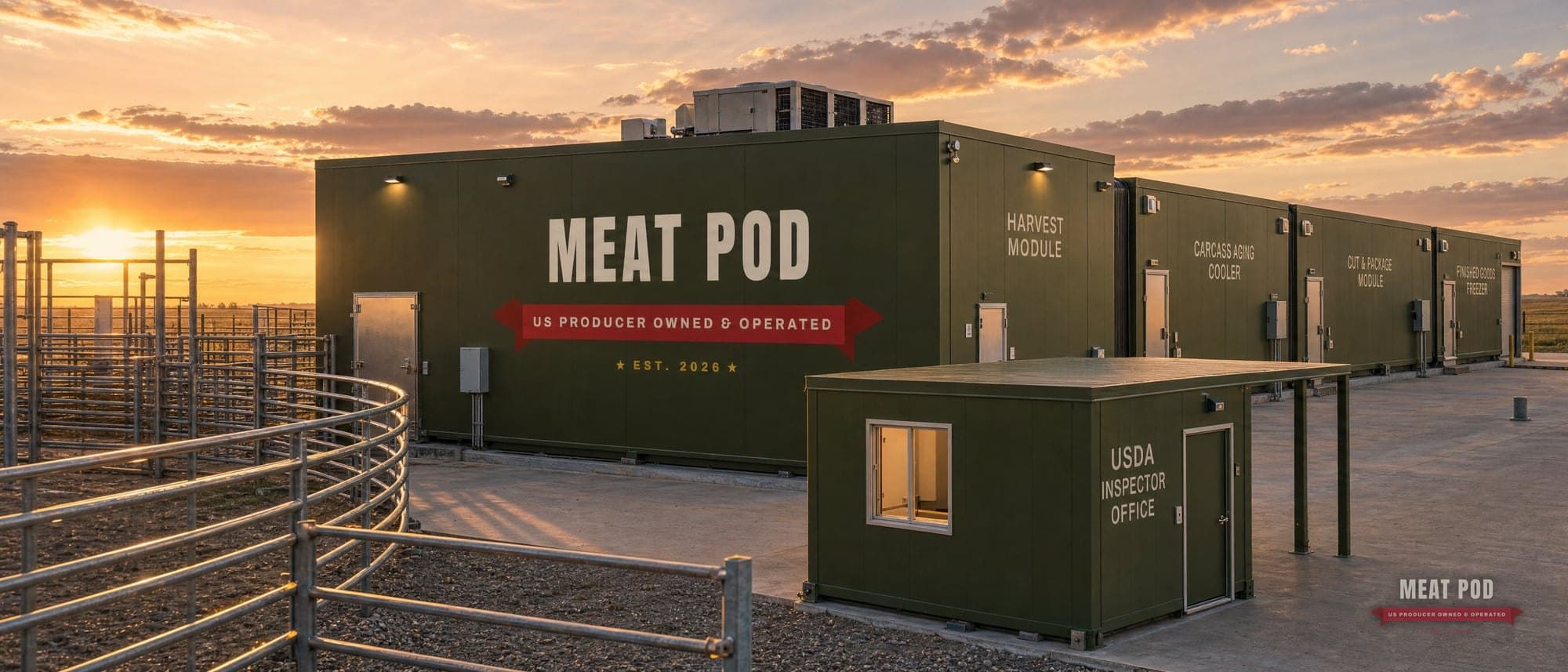
Four connected modules. Harvest, aging, cut and package, freezer. Fifteen head a day, USDA-inspected, with the inspector's office on site. It goes wherever the cattle are.
Process what you raise, sell under your name, keep the margin at home.
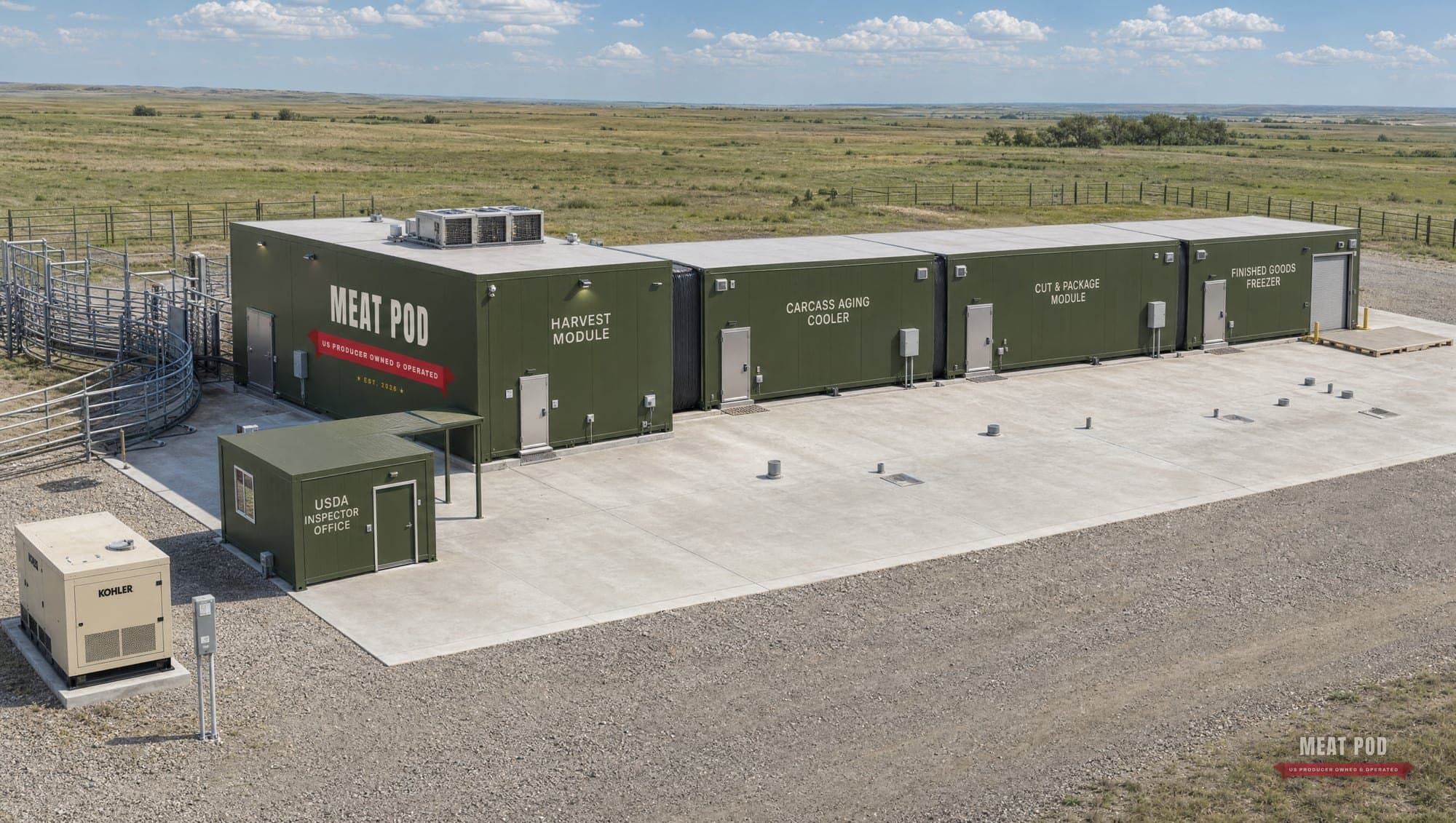
The animal never leaves the property. Harvest, age, cut, and ship from the home place.
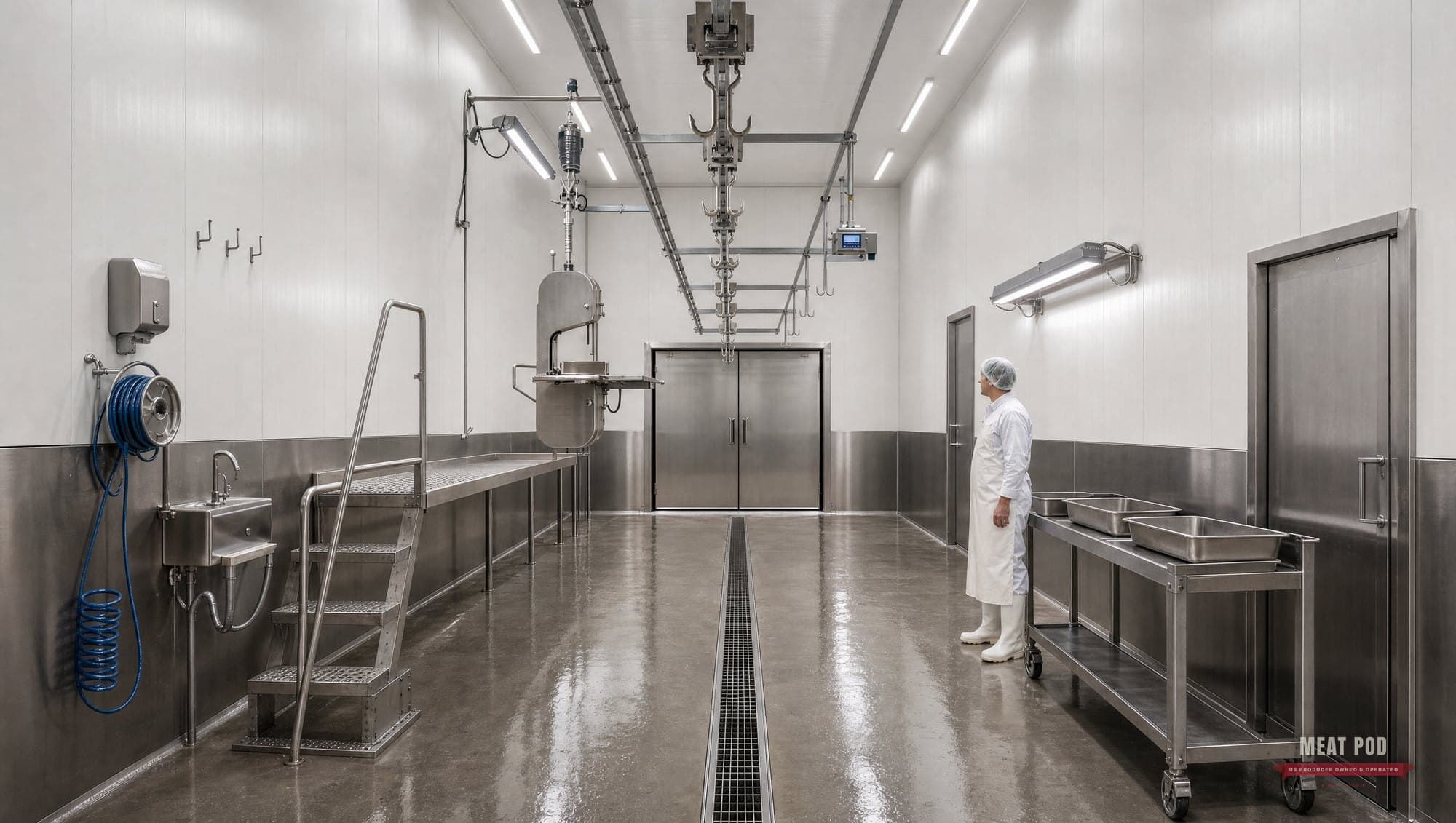
Finish and process on one site. Your customers' cattle, your program, your plant.
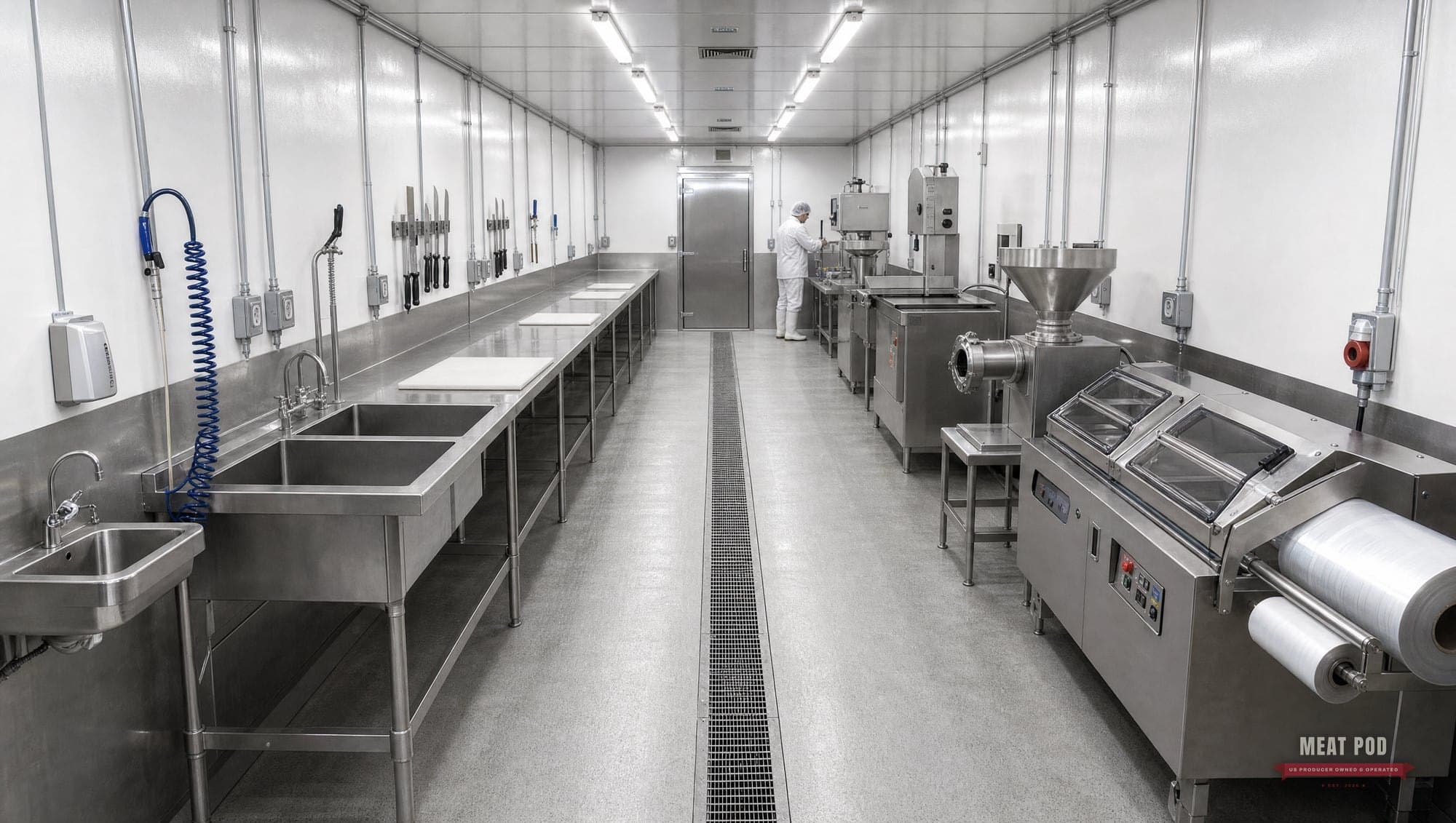
A community-owned plant on the edge of town that serves every producer for 50 miles.
The money is on the table. For now.
Federal dollars for small processors have never been this deep or this pointed at producers. Rounds open and close. Our in-house SBA specialist works every one of them for you.
See financing and grants- $500Mto protect small and mid-sized beef processorsSep 4 executive orders
- $60MMeat and Poultry Processing Expansion Program, round fourUSDA, June 2026
- $20Movertime and holiday inspection fee relief for small plantsUSDA FY2026
- $25Mnew Farm to School grants that buy local beef for cafeteriasAug 24
- $70Mschool kitchen infrastructure to cook real food againAug 24
The buyers are already local.
Schools
Harvest to Hallways reimburses districts for locally produced beef through the Local Option. Kentucky districts are already buying it. Yours can.
Your own shelf
NFN Farmers Market locations and a network of producer members give the plant a place to sell before the first animal is harvested.
People who want a name on it
Local, traceable beef sells at a premium over commodity retail. With the plant, that premium is yours to earn, not a packer's.
Timing is everything.
The right is yours. The money is available. The buyers are next door. The only thing missing is the plant, it takes three to six months to place one, and we consider four to seven applicants per state each quarter at founding-network terms.
Want one on your ground? Get on the list.
We consider four to seven applicants per state per quarter, in the order producers commit. Tell us where you are and how many head you run, and we will call with a site timeline and the next steps. No cost, no commitment.
- Any state. Enough producers in one area anchors a regional custom packing plant and local distribution
- Timeline is driven by site prep: slab, utilities, and livestock handling
- Our in-house SBA specialist walks you through funding before you sign anything
Government actions are described from the linked USDA releases and public statements and are subject to rulemaking and change. Funding amounts are program totals, not awards to any applicant. Nothing on this page is a franchise offer or a financial performance representation; see the Franchise Disclosure Document, Item 19. Meat Pod is a Nebraska Farmers Network venture.